

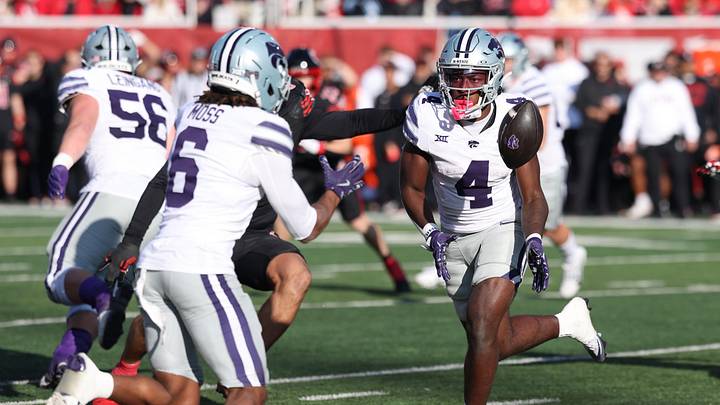
The NCAA is trying to bring college football closer to what March Madness already does: expand the field, add more games, and replicate its chaos. But where the NCAA Tournament thrives on upsets, a growing College Football Playoff picture might not be the answer. For Kansas State, that difference may matter more than expansion itself.
Where an expanded college football playoff actually hurts the Wildcats
Every Power Four program is chasing a moving target, that being a spot in the College Football Playoff. What began as a two-team national championship game already grew to four, and later expanded into 12. Now, we're on the verge of possibly seeing 24 teams.
Big Ten Commissioner Tony Petitti on a 24-team College Football Playoff: “Inside our league, there’s a deep commitment to 24 and the access.” He says the desire access comes from the investment programs are making.
— Pete Thamel (@PeteThamel) May 20, 2026
ESPN's Bill Connelly compared the direction of the sport as "college football’s version of AI:" deeming it a system “nobody asked for, and almost nobody seems to actually like or want.”
On paper, that kind of expansion should feel like a win for programs like Kansas State. More spots, more access, and more chances to break into the national picture. But in reality, it's more complicated than that.
Where more access doesn't always bring highlights
Even as the field grows, calling a basic appearance into a 24-team tournament differs the real meaning of "opportunity." For programs not deemed as elite, better odds don't always translate. An expansion could just as easily become bland, and another reason not to watch.
At some poit, access stops feeling like access. When nearly half the sport gets a bid, it's less of an achievement and more about expectation. The result isn't chaos, it's a different kind of predictability where the same programs won't separate themselves until later in the postseason.
And that's where concern creeps in for lower-graded programs. It's not because they're shut out, but because the path in doesn't change what happens after they arrive.
For Kansas State and similar programs, the question isn't whether they can make the bigger playoff, but what kind of benefits actually exist. If there answer is none, then why even accept the invite?
And it's worth stressing this: there are no official plans for a 24-team playoff. No finalized contracts exist and approvals haven't gone beyond a 12-team structure. What's unfolding is more of a ripple effect, given how quickly things are expanding.
Blurring the regular season stakes
Given the current format, there's a lot at stake during the regular season. For teams like Notre Dame or Michigan, even single losses to non-Top 25 teams can end seasons.
Expanding the format not only erases that concern, but makes the currently exciting regular season look more like practice. Take away the pressure, high stakes and rivalry contests, and fans get left with dull, meaningless competition.
More teams will remain in contention towards the end of November with little true chaos. Fewer games could become turning points, and more just become about seeding rather than urgency. It will become less about how the sport is experienced, and more about forgiving mistakes and previously season-ending losses.
Bookmark Jug of Snyder and follow us on X with the username @JugofSnyder and Facebook @ksujugofsnyder.
 Add us as a preferred source on Google